Building the Future of Cancer Care—Together
Philanthropy fuels transformational change
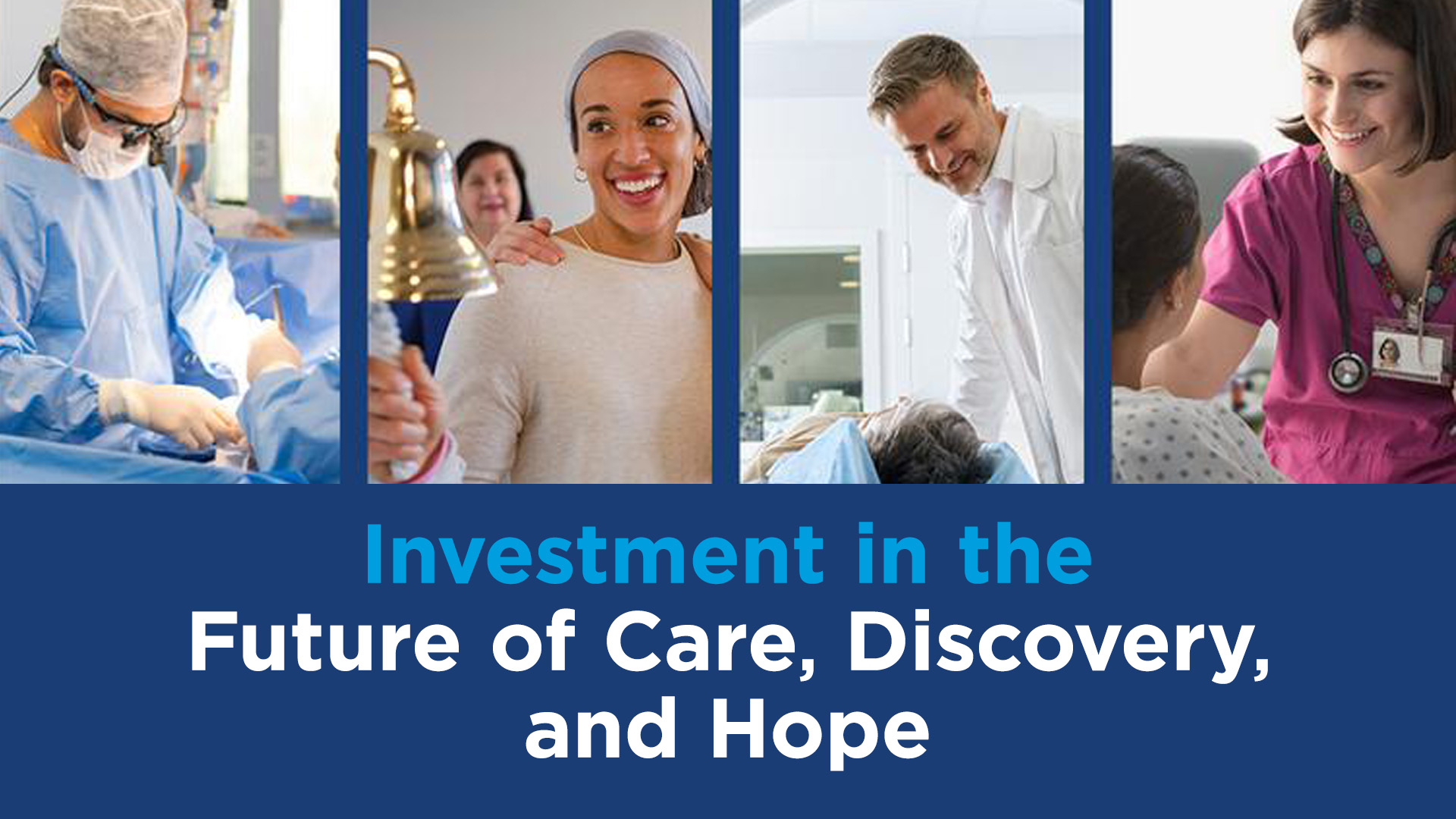
Beth Israel Deaconess Medical Center is embarking on a period of transformation unlike any in our recent history, including a complete reimagination of our clinical programs and the talent that drives them, sparked by the Dana-Farber Beth Israel Deaconess Cancer Collaboration. This landmark partnership will reshape cancer care across the region. Designed around the needs of oncology patients, a new adult inpatient cancer hospital will bring oncologists, surgeons, radiologists, nurses, and researchers together under one roof, creating a fully integrated environment that accelerates discovery and elevates every aspect of care.
To support the new model of care that the Collaboration represents, BIDMC is undertaking a sweeping expansion of its clinical and scientific workforce by recruiting more than 200 faculty. To support patients with cancer at every stage of their care journey, our teams need to expand in specialties well beyond oncology, with a particular emphasis on surgical oncology, pathology, radiology, and other key subspecialties.
[QUOTE_HERE]
At a time of such profound possibility, philanthropy is critical to expand the teams that drive leading-edge discoveries and continually enhance our collaborative and patient-centered approach to care. We are grateful for visionary donors who have already stepped up to accelerate this work and build momentum—generous donors like Leo D. Arnfeld, PhD.
Through his recent planned gift, Arnfeld generously conveyed both deep gratitude to BIDMC and confidence in its future. Arnfeld’s connection to the medical center dates back to the 1950s, when his newly immigrated family received free medical care from what was then Beth Israel Hospital. “The initial reason for my recent gift was to serve as a ‘thank you’ to BIDMC for caring for me and my family when I first arrived in the United States,” he says. “It’s a way to give back for the incredible role they played in my life and also the many Jewish immigrants that came to Boston during that time.”
Arnfeld has long admired BIDMC’s commitment to excellence in both research and care, especially in cancer care, which has benefitted his family more recently. Learning about the plans for the new inpatient cancer hospital and the transformative opportunities it will create only reinforced his decision to support this pivotal initiative. “It is incredibly important to support cancer physicians and researchers so they can continually improve outcomes in cancer care,” he says.
Arnfeld’s gift is particularly powerful as it provides unrestricted funds for areas of greatest need across cancer care and research. This trust in BIDMC’s leadership, combined with the flexibility it provides, represents the type of forward-thinking philanthropy that will enable BIDMC to seize this moment. “When I heard about the collaboration and the life-changing research and care that would happen in this new space, I knew immediately that I wanted to contribute to help shape the future of BIDMC,” says Arnfeld.
Arnfeld’s generosity is a reminder of the essential role of planned gifts in advancing BIDMC’s mission. “The medical center has always provided care for people in need,” says Arnfeld. “I trust that my donation will be used to benefit the community and bring leading-edge medicine to many.” Many donors discover that their most impactful contribution can come from assets already in their lives—such as real estate, securities, retirement accounts, life insurance policies, or other holdings. These non‑cash gifts may offer tax advantages and can be structured to support both the donor and the medical center, creating a legacy that carries forward a donor’s values and commitment to exceptional care. Please reach out to Noreen Mitchell, Vice President of Philanthropy, for more information on making a planned gift.
As BIDMC continues its ambitious journey to expand access to world‑class care—uniting extraordinary talent, groundbreaking research, and state‑of‑the‑art infrastructure—philanthropy helps ensure that this important work will benefit patients and families for generations to come.